The CoalkeeperA field guide by J. C. Eld
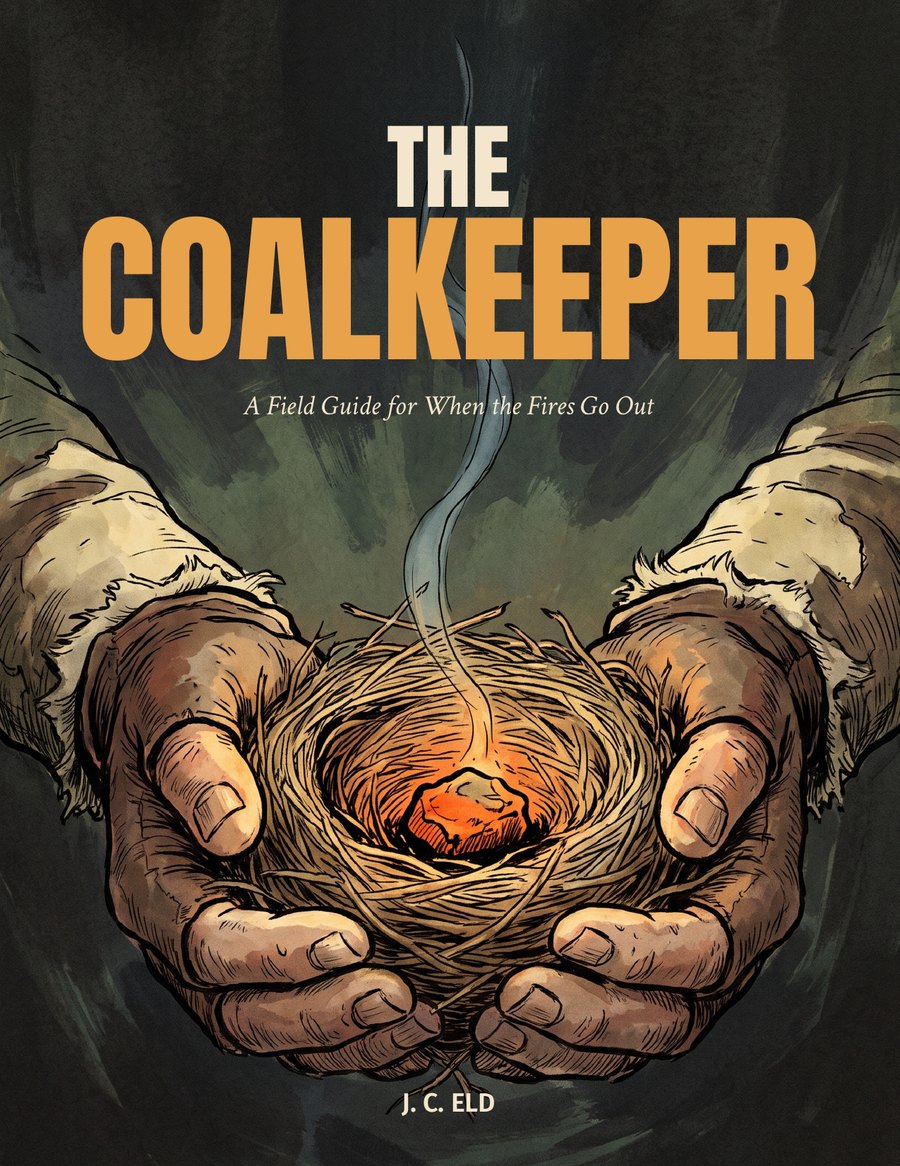
Front cover of The Coalkeeper by J. C. Eld: an ember held in cupped hands

A field guide for when the fires go out

The Coalkeeper

A Field Guide for When the Fires Go Out

By J. C. Eld

When the grid goes down, the stores empty and help stops coming, what you know is all you have. Every skill in this book is shown, not just described, so the answer is in front of you when there is no internet to search and no one to call.

Coming soon to AmazonLook inside
  • 390full-color pages
  • 127illustrated diagrams
  • 101real photographs
  • 28chapters

Important noticeThis book is general information for extreme emergencies. It is not medical, legal or professional advice, and many practices it describes are regulated or illegal in normal times. Read all 20 notices →

01Why this book

Built for the moment it is needed

A reference you can open in the dark, in a hurry, with dirty hands: big pages, clear drawings, and the answer on the page you turn to.

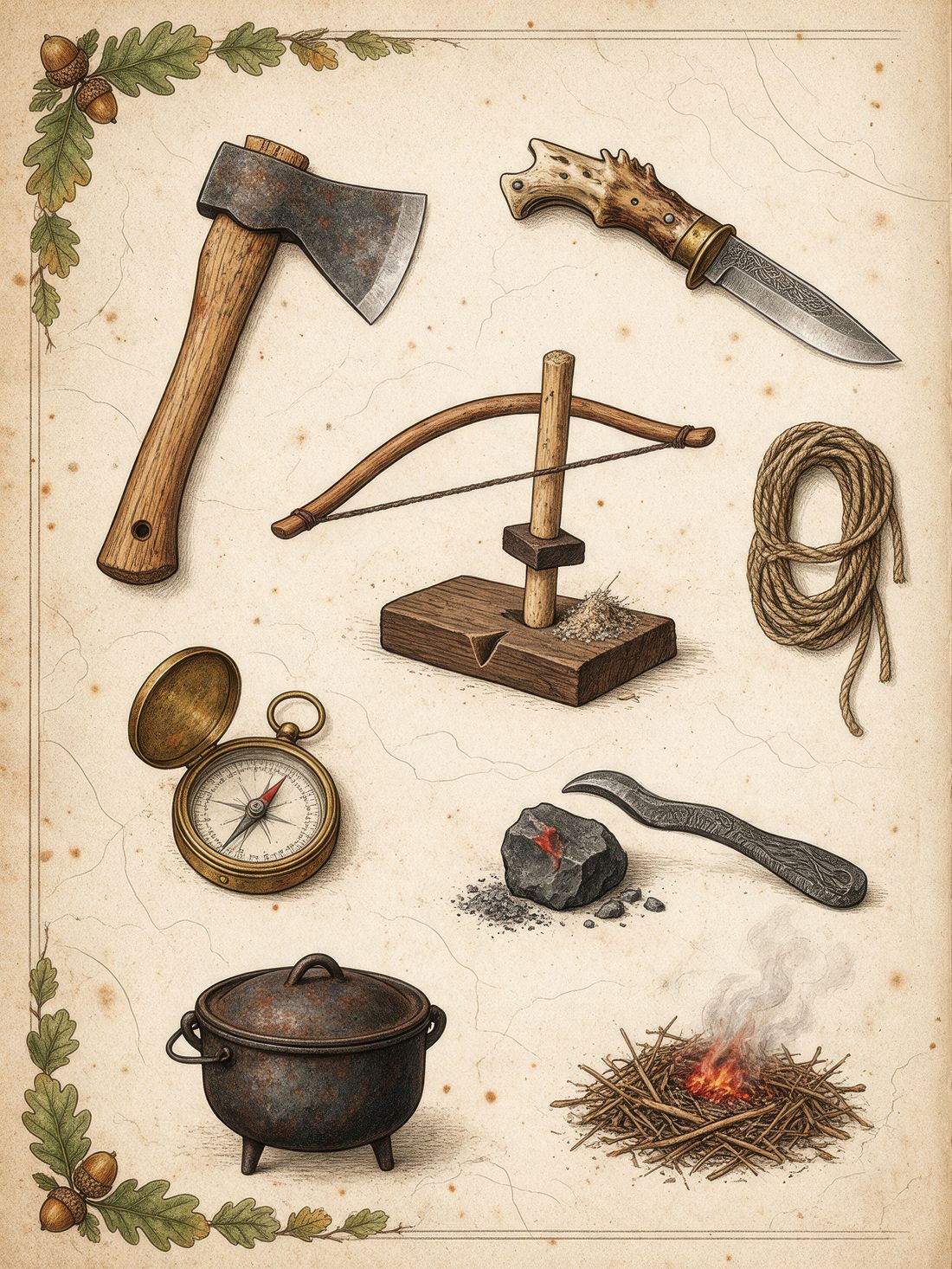
Illustrated endpaper from the book: an axe, a knife, a bow drill, rope, a compass, flint and steel, a Dutch oven and a tinder nest
From the endpapers: the tools of the first fire.

Shown, not just described

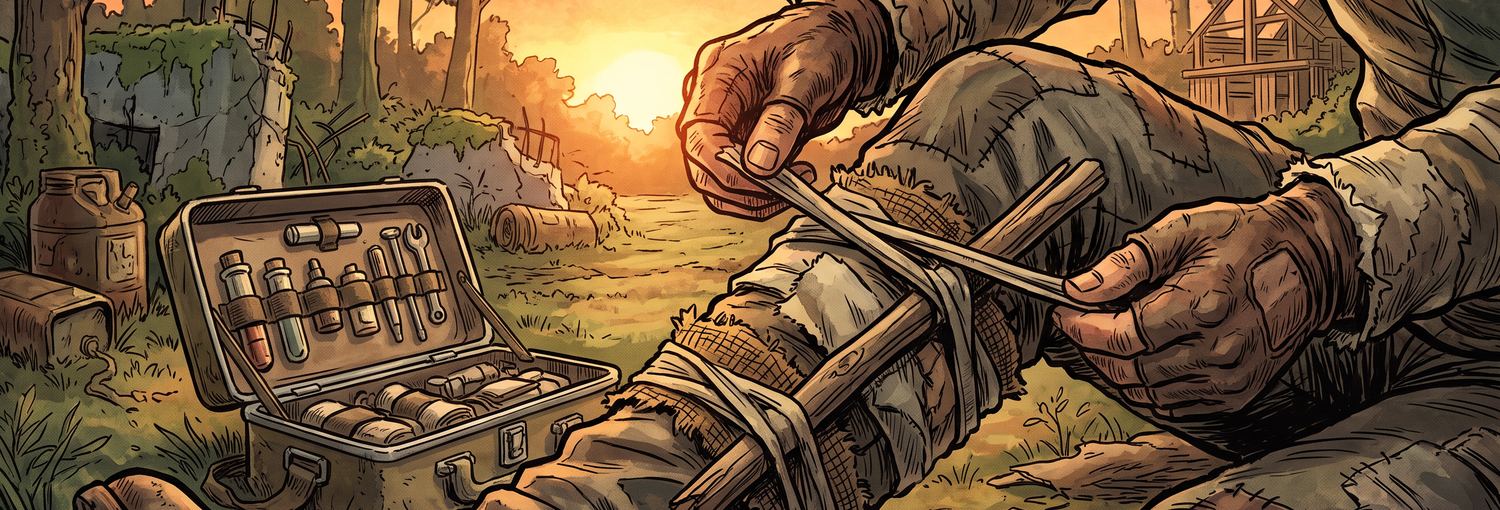
Each skill is drawn step by step and labeled, from snares to solar wiring to splinting.

127 diagrams

Real photos for identification

Poisonous plants, their safe look-alikes, stinging insects and knots are shown in real color photographs, never AI images.

101 photographs

Checked against sources

High-risk numbers, from doses to temperatures, were checked against agencies, extension services and papers.

63 logged fixes

Organized by urgency

Emergency quick cards up front, then six color-tabbed parts in the order you will need them, and a full index.

6 parts

—From the first week to the years after

Not just how to last. How to rebuild.

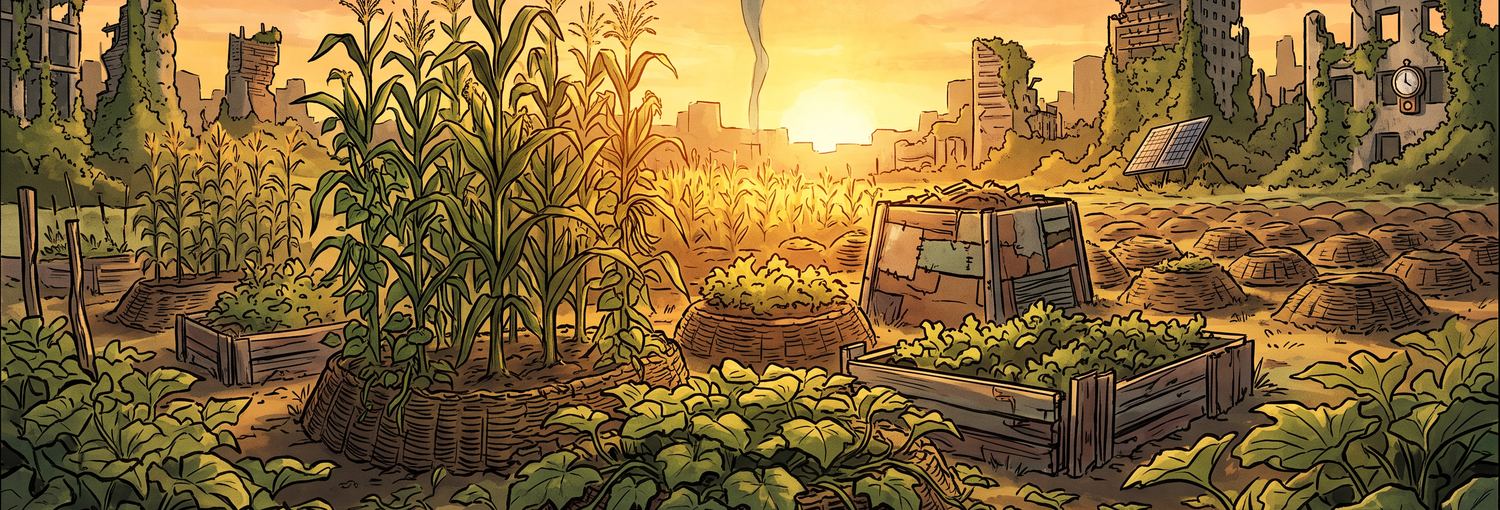
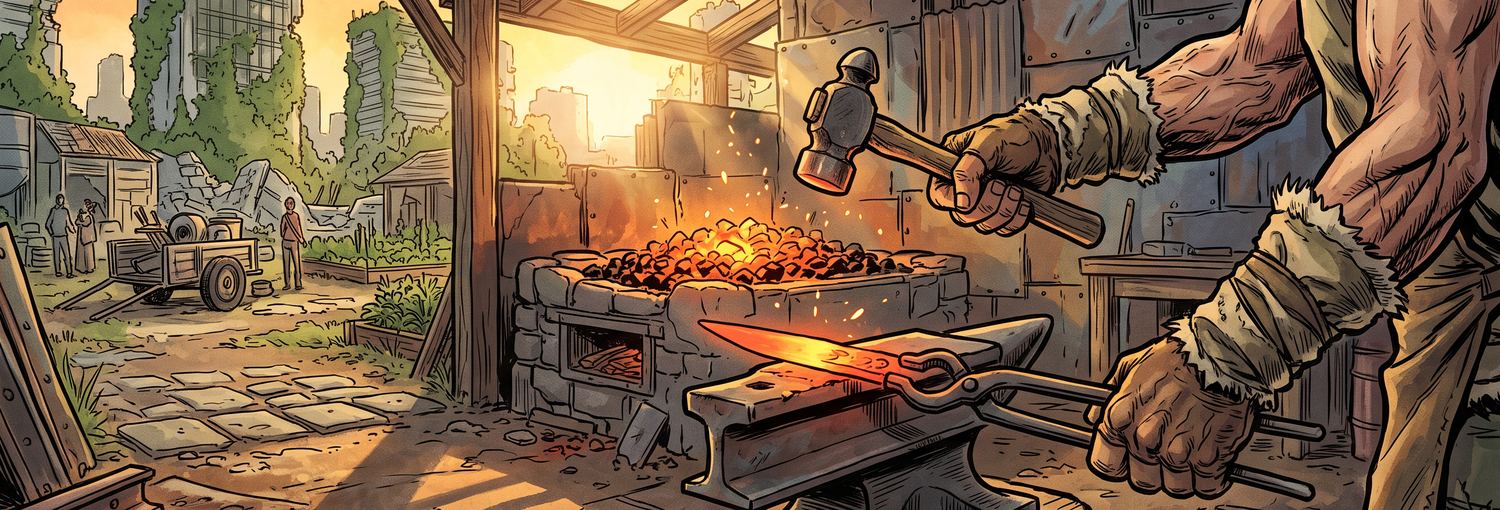
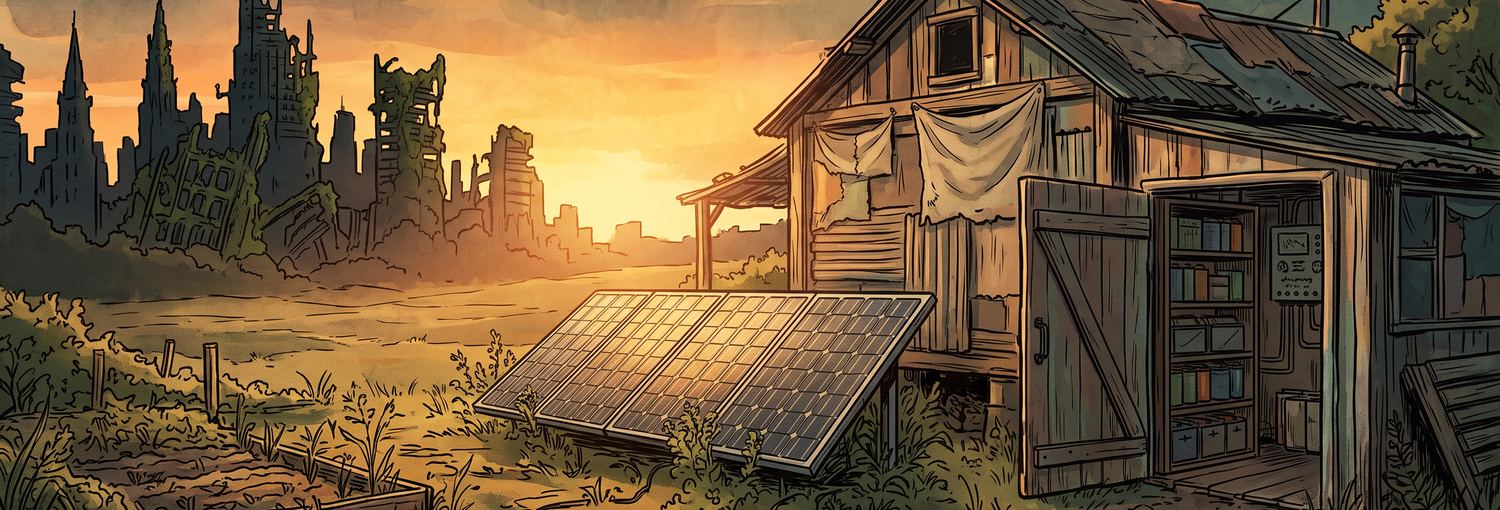
It starts with the first hours, when the right moves keep you alive, and works through everything that follows: clean water, fire, shelter in any season, food from the wild and the garden, animals, tools and metal, and power without the grid.

  1. 1The First Days
  2. 2Water, Fire, Shelter
  3. 3Health and Safety
  4. 4Food
  5. 5Making and Repair
  6. 6Power

02Contents

Inside, in six parts

Organized in the order you will need it: the first hours and weeks, then water, fire and shelter, health, food, making and repair, and power.

Part One

The First Days

How to prepare, and what to do in the first hours and weeks of a blackout, disaster, attack or collapse.

  1. 1Priorities and the Survival Mindset
  2. 2Before the Crisis
  3. 3The First Week
  4. 4Weather, Disasters and Home Safety
  5. 5Surviving a Nuclear Blast and Fallout
Part Two

Water, Fire, Shelter

What a body needs first: clean water, warmth and cover.

  1. 6Water
  2. 7Fire
  3. 8Shelter
Part Three

Health and Safety

Keeping people and their animals alive, well, found and safe.

  1. 9Medicine, First Aid and Sanitation
  2. 10Childbirth and Newborn Care
  3. 11Plant Medicine of the Northeast
  4. 12Dogs, Cats and Other Pets
  5. 13Navigation, Communication and Community
  6. 14Evasion, Deception and Hostile People
Part Four

Food

From the wild, the garden and the barn, and how to keep it.

  1. 15Poisonous and Edible Wild Plants of the Northeast
  2. 16Agriculture
  3. 17Hunting, Trapping and Fishing
  4. 18Livestock, Poultry and Bees
  5. 19Butchering and Meat Processing
  6. 20Food Preservation and Storage
Part Five

Making and Repair

Turning raw materials into the things a household needs.

  1. 21Hides, Leather and Rawhide
  2. 22Cordage, Knots, Spinning and Cloth
  3. 23Tools, Blacksmithing and Metalwork
  4. 24Home Chemistry
Part Six

Power

Engines and electricity without the grid.

  1. 25Engines and Mechanical Repair
  2. 26Electricity and Batteries
  3. 27Solar Energy
  4. 28Wind and Water Power

03Sample pages

Shown, not just described

Three real pages from the printed book. Every skill is drawn, labeled and checked against primary sources.

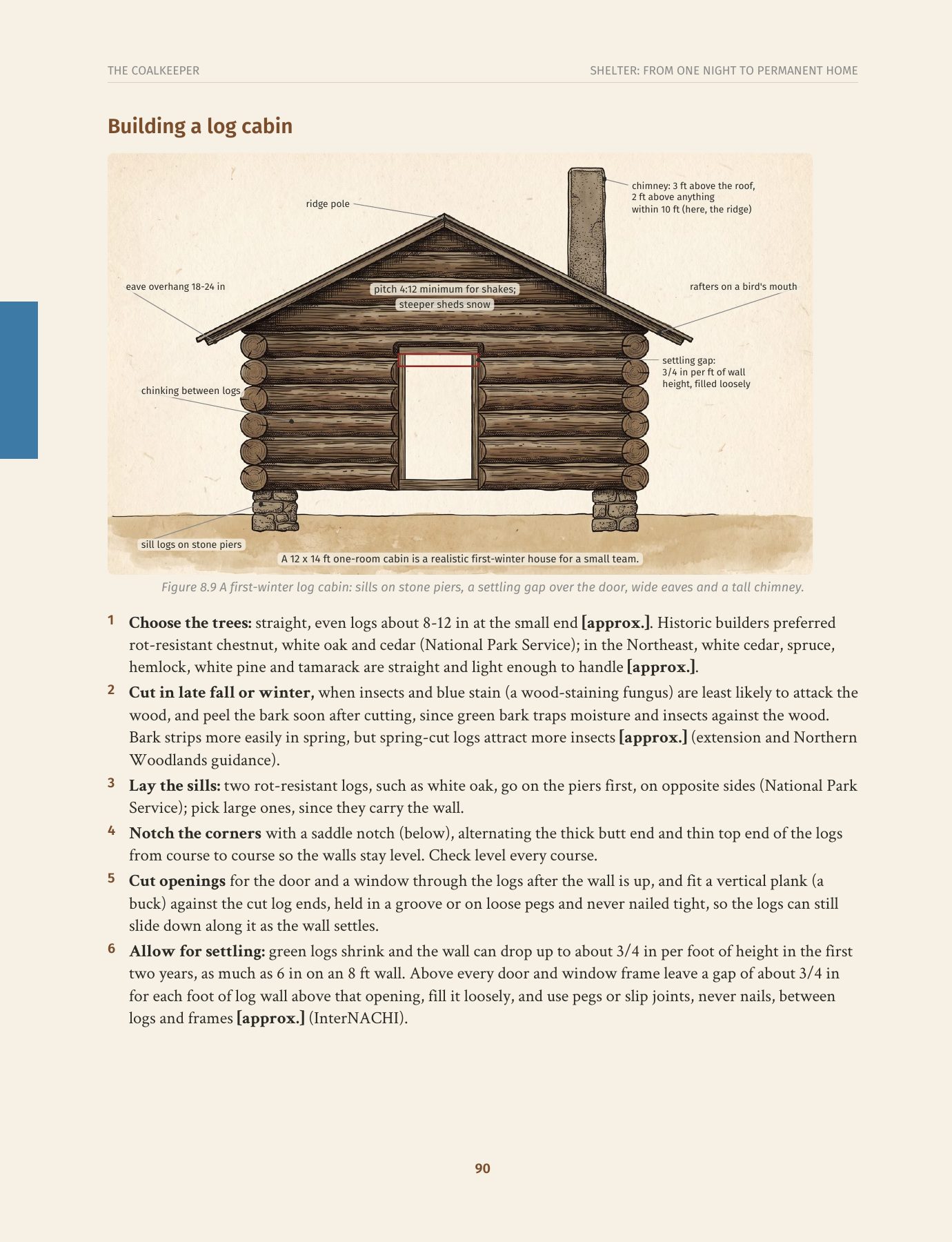
Sample page: Shelter: foundations without concrete and starting a log cabin
Page 94Shelter: foundations without concrete and starting a log cabin. Tap to enlarge.
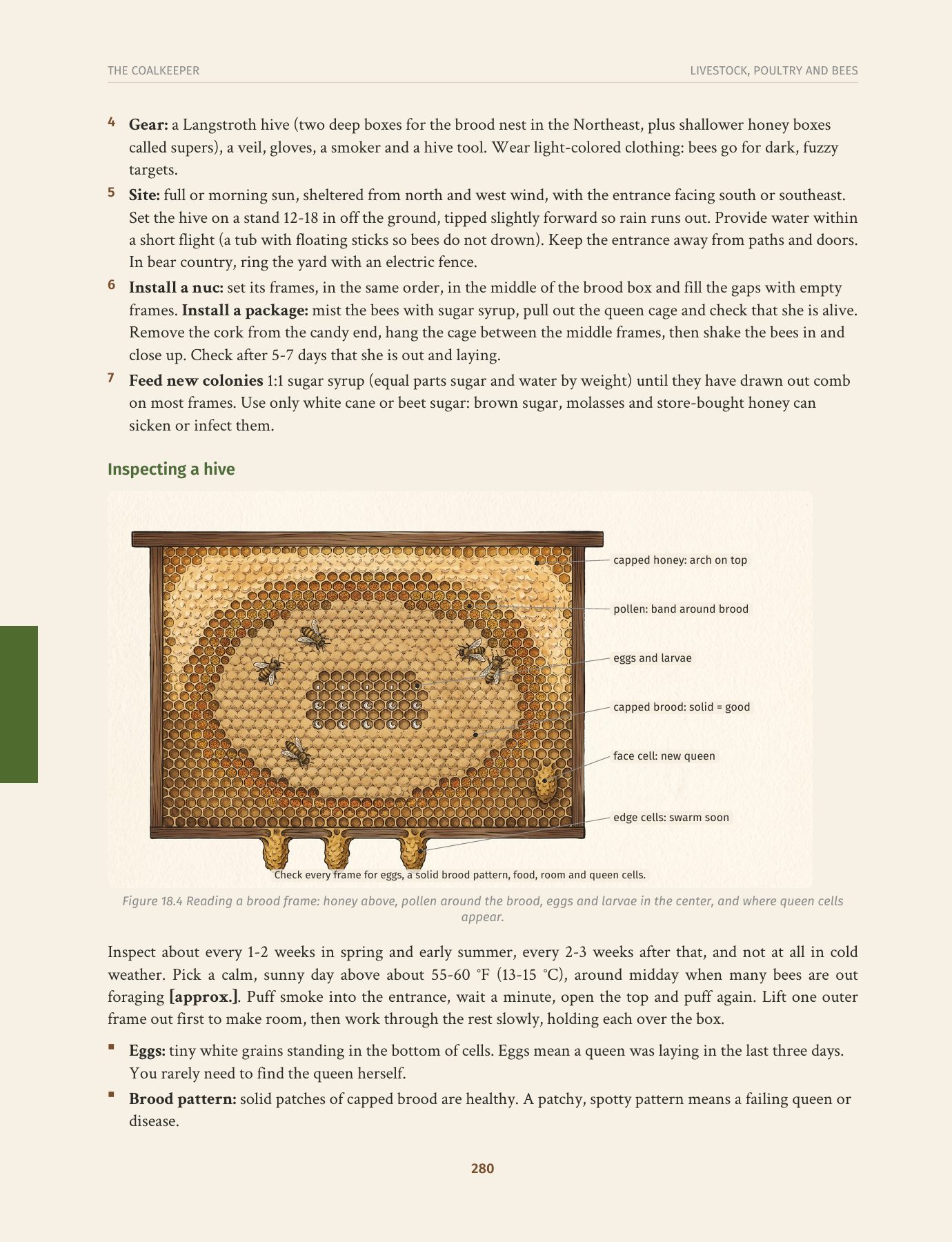
Sample page: Livestock and bees: reading a brood frame
Page 284Livestock and bees: reading a brood frame. Tap to enlarge.
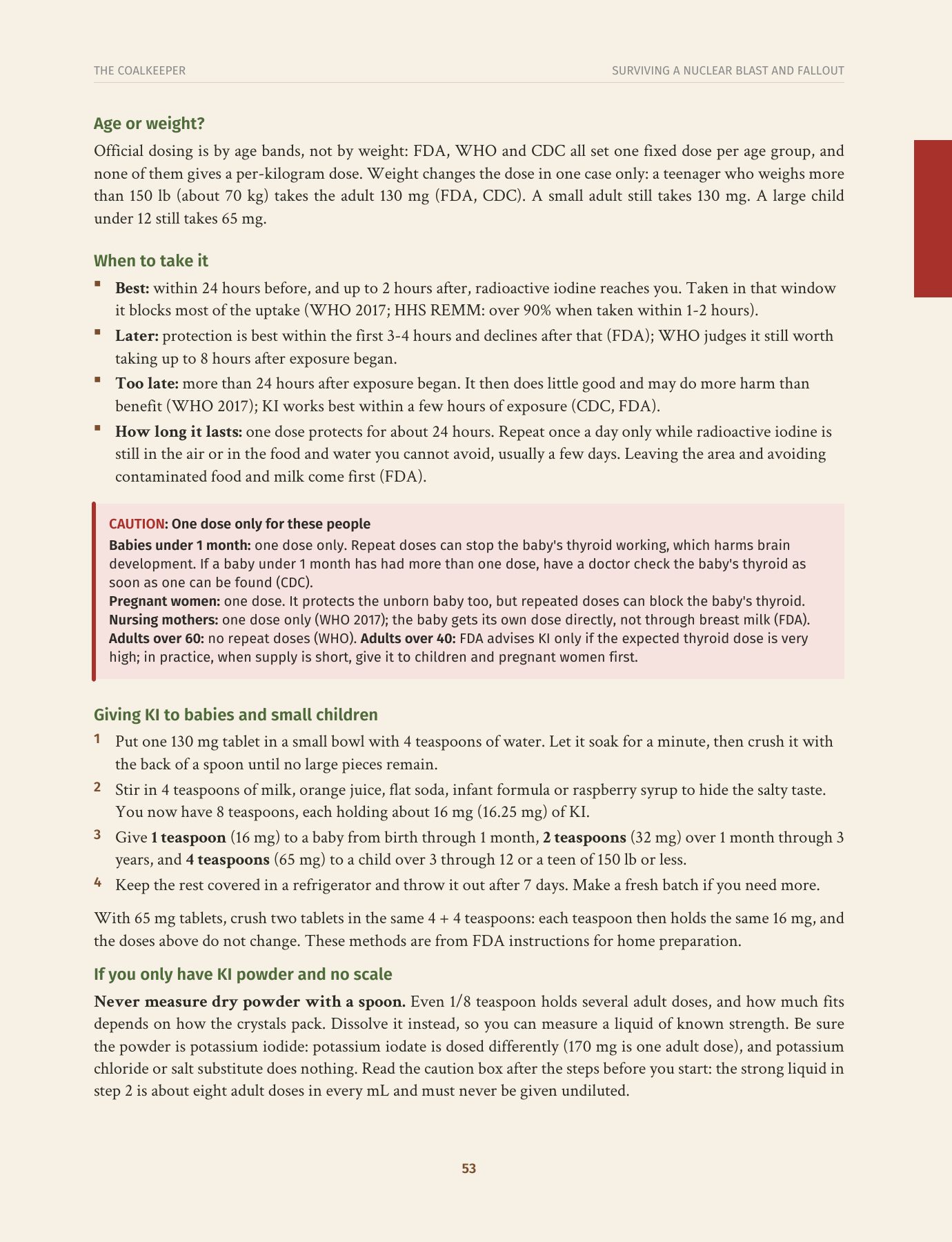
Sample page: Fallout: dosing potassium iodide without a scale
Page 57Fallout: dosing potassium iodide without a scale. Tap to enlarge.

04Sources

Every claim has a source

In November 2026 about 4,000 factual, numeric and procedural claims in this book were each checked against two independent reliable sources (agencies, professional bodies, extension services, standards and peer-reviewed papers).

24source groups, chapter by chapter
25books in the recommended library
63corrections in the fact-check log
101credited, licensed photographs

05Disclaimers

Read this before you rely on it

The book carries a legal notice wherever it describes something that is regulated, licensed or dangerous in normal times. Here is every one, with the chapter it sits in.

Important notice: Read this first

This book does not replace medical advice. It is for emergencies only, when no medical professional can be reached. If a doctor, nurse, midwife, medic or other trained help is available, get that help and follow it. This book is intended for use only in extreme survival situations in which society has collapsed and lawful authority and services no longer function. In normal times many practices it describes are regulated, licensed or illegal, and several require professional training. Nothing in it is medical, legal or professional advice; obey the laws that apply to you while they are in force. Sections that carry this notice describe such practices. The author accepts no responsibility for how this information is used.
Read the full disclaimers

06The author

About the author

J. C. Eld grew up in the mountains of Colorado and spent years practicing survival techniques in the Rocky Mountains. This book sets that practice beside the published work of the trappers, foragers, smiths, healers, medics and guides named in its sources. It was compiled and illustrated with the help of software tools, including artificial intelligence, and its numbers were checked against those sources.

DISCLOSURES: J. C. Eld is a pen name. AI tools helped draft some text and make many illustrations; every label, number and instruction was laid out and checked by the author. Full disclosures.
FIELD TIP: Built to be used, not shelved

Large pages in full color, emergency quick cards up front, color-coded part tabs on the page edge, and a full index.

KEY NUMBERS: 390 pages · 28 chapters · 127 diagrams · 101 photographs
CAUTION: This book does not replace a doctor, a veterinarian, a licensed electrician or your local laws. In an emergency call 911.

07Questions

Asked and answered

Is this book medical or legal advice?

No. It is general information for emergencies, written for when no doctor, vet, electrician or official can be reached. Whenever trained help is available, use it. Every notice printed in the book is listed on the Disclaimers page.

Where can I buy it?

The paperback is coming soon to Amazon. This page will link to the listing the day it goes live. It is a large-format, full-color book of 390 pages.

Where do the facts come from?

From government agencies, extension services, professional bodies, standards and peer-reviewed papers. The Sources page lists them chapter by chapter, with the recommended library and a fact-check log of 63 corrections.

Were AI tools used to make it?

Yes, and it is disclosed. Some text was drafted with AI help and then rewritten and fact-checked; many illustrations were made with AI image tools from the author's own diagrams. Photographs used for identifying plants and insects are real photographs. Details are on the Disclosures page.

I found an error. Who do I tell?

Email contact@thecoalkeeper.com with the page number and, if you can, a source. Corrections go into the next printing and the fact-check log.

Does this website track me?

No. There are no cookies, no analytics, no forms and no third-party requests. See the Privacy Policy.

Keep the fire going

A printed field guide works when nothing else does. Put it on the shelf before you need it.

Coming soon to Amazon

Paperback · 390 pages · ISBN 979-8144009157